Sedona Vortex Retreats: What They Are and Are They Worth It?
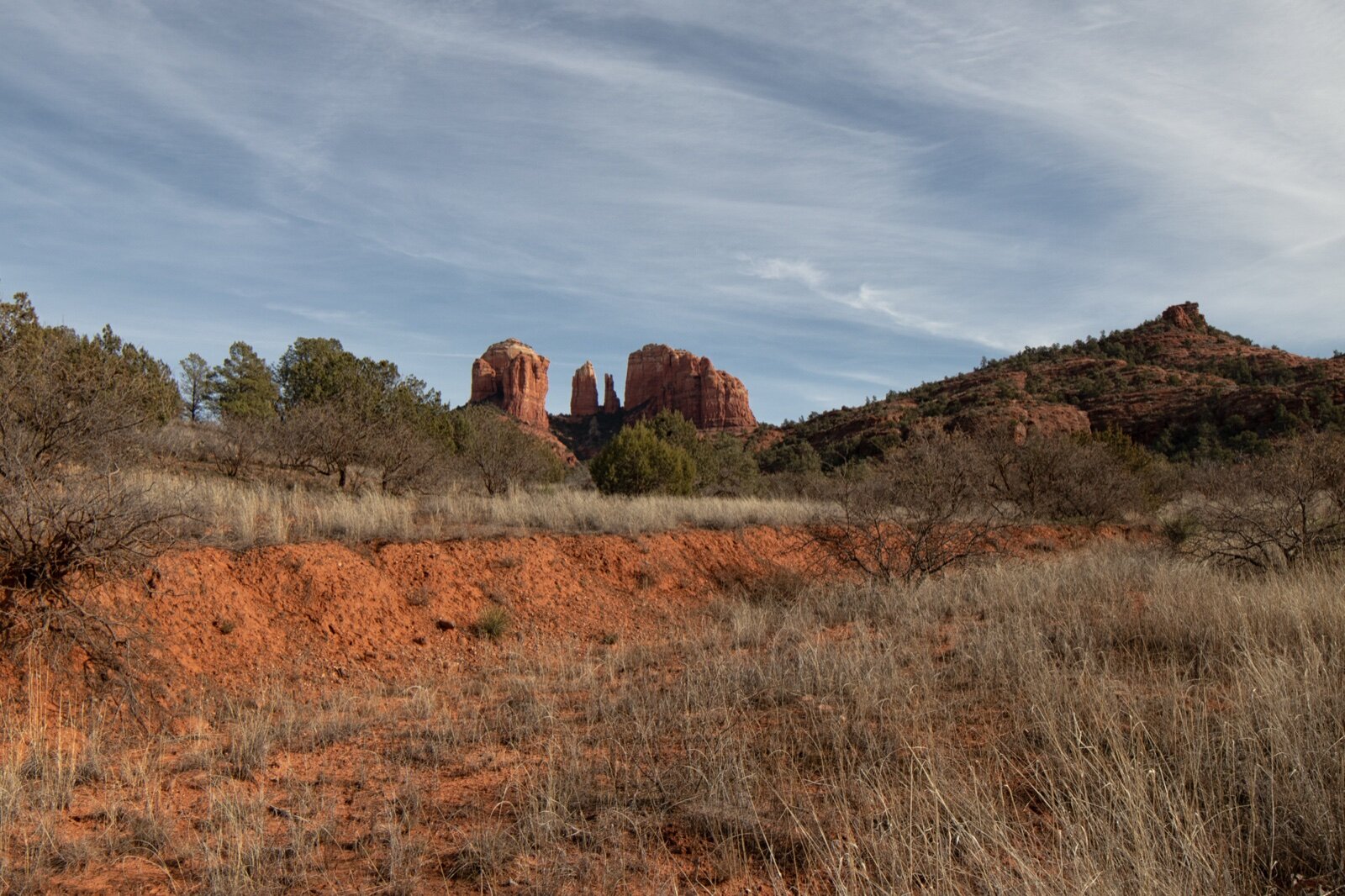
Cathedral Rock, Sedona by Shawn Hinsey (CC BY 2.0), via Wikimedia Commons. Cathedral Rock is one of the four best-known vortex sites.
A Sedona vortex retreat is a guided few days built around the red rock sites that Sedona is famous for, combining hikes to one or more vortexes with meditation, breathwork and group work. It is the single most-marketed wellness product in Arizona, and it is also the one people are most unsure about, because the marketing rarely separates what you will definitely get from what is being implied. This guide takes both apart: what a vortex is claimed to be, what the evidence actually supports, what a retreat includes, and whether it is worth paying for rather than driving there yourself.
What a vortex is supposed to be
Sedona's tourism board describes vortexes as "swirling centers of the earth's energy" that are "conducive to healing, meditation and self-discovery." Four locations are named as the best known: Airport Mesa, Cathedral Rock, Bell Rock and Boynton Canyon. Practitioners assign each a character, commonly framed as upflow or masculine energy at Airport Mesa and Bell Rock, inflow or feminine at Cathedral Rock, and a balance of the two at Boynton Canyon.
The usage of "vortex" in this sense is modern, dating to around 1980, rather than a traditional Indigenous term, though the wider landscape has genuine and long-standing significance to the Yavapai-Apache and other nations of the region. Boynton Canyon in particular sits in an area of deep cultural importance, which is a reason to stay on marked trails, keep gatherings small and leave no trace of any ceremony.
What the evidence actually shows
There is no established scientific measurement of a distinct magnetic or electromagnetic field at these sites that differs from the surrounding geology. If you take a compass to Airport Mesa expecting it to spin, it will not. Sedona's own tourism board is more candid than most operators: alongside the energy language it notes that the scenic beauty and the outdoor activity themselves recalibrate your sense of wonder, which is a fair description of what most visitors experience.
That does not make a vortex retreat worthless. It relocates the value. Several days outdoors at altitude, with your phone away, in a structured group, walking every morning and reflecting every afternoon, produces real and well-documented effects on mood and stress. Those effects do not require an energy field to be true. The honest framing is that you are buying guided time and structure in an extraordinary landscape, and that framing is also the one that protects you from paying a premium for a claim nobody can substantiate.
What actually happens on one
Formats vary, but most Sedona vortex retreats run three to five days and share a shape:
- Morning hikes to vortex sites. Early, because of heat and parking. A guide sets an intention, gives the site's traditional framing, and holds a seated meditation on the rock.
- Meditation and breathwork sessions. Usually back at the property, in the afternoon heat.
- Group processing. Circles, journaling prompts, sharing. This is often the part participants rate highest afterward, and the part the brochure mentions least.
- Optional one-to-one work. Energy sessions, readings, bodywork, astrology. Sometimes included, often an upsell.
- Sound sessions and ceremony. Crystal bowls, drumming, occasionally a fire ceremony.
Smaller retreats run with six to twelve people; larger operators run rolling groups of twenty or more. Group size changes the experience more than the itinerary does, so ask before you book.
Doing it yourself: the honest alternative
All four main vortex sites are on public land and open to anyone. You do not need a guide, a ticket or permission to sit on Bell Rock. What you need is a parking pass.
The Red Rock Pass is a US Forest Service pass required at 19 day-use sites in Red Rock Country, including Cathedral Rock and the Bell Rock Pathway. It costs 5 dollars for a day, 15 for a week or 20 for a year, and an America the Beautiful interagency pass is accepted instead. A pass is not needed for a short stop of roughly 15 minutes or less to take a photograph. Passes can be bought at kiosks at the sites themselves and at the Sedona Chamber of Commerce visitor center.
So the self-guided version of a vortex trip costs a parking pass, a rental car and a place to stay. What a retreat adds is structure, teaching, a group and someone else making every decision. If you have tried to build your own wellness itinerary and abandoned it by day two, that is worth real money. If you are self-directed and happy alone, it may not be. Our guide to what a wellness retreat costs helps you judge the premium against what is actually included.
Choosing well, and the red flags
Sedona's wellness market is largely unregulated, which means quality ranges from excellent to exploitative. Before you pay a deposit:
- Names and backgrounds. Real facilitators, named on the site, with a checkable history. "Our team of intuitive guides" is not a credential.
- A published schedule. Hour by hour, with which sites you actually visit. Vague retreats tend to be thin retreats.
- What the price includes. Accommodation, meals, transport to trailheads, park passes, and which sessions cost extra.
- No medical claims. Anything promising to cure, treat or reverse a diagnosed condition should end the conversation. That is the clearest single warning sign.
- No plant medicine. Psychedelic ceremonies are not legal in Arizona. An operator willing to break that law is telling you how it handles your safety generally.
- A written refund and cancellation policy. Including what happens if a facilitator withdraws or the group does not fill.
Our list of wellness retreat red flags covers the wider pattern, and how to choose a wellness retreat walks through the questions to ask before paying.
Practicalities that change the trip
Sedona sits at roughly 4,500 feet, so plan for altitude, dry air and strong sun. Spring and fall are the comfortable hiking seasons and also the busiest and priciest. Summer means very early starts and real heat risk on exposed rock. Winter is quiet and can be spectacular with snow on the red rock, but limits what you can hike. Trailhead parking at Cathedral Rock fills early most of the year, which is one practical argument for a guided group: someone else solves the logistics.
The verdict
A Sedona vortex retreat is worth it if you want a structured, guided break in one of the most striking landscapes in the country and you value having the thinking done for you. It is not worth a premium if you are buying a measurable energy phenomenon, because that is not what is on offer, however it is described. Judge the retreat on its facilitators, its schedule and its group size, not on the strength of its energy claims, and you will book well.
For specific properties and programs, see our roundups of the best wellness retreats in Sedona, spiritual and vortex retreats in Sedona and affordable Sedona options, or start from Retreat Central.
Frequently asked questions
What is a Sedona vortex?
A vortex is described by Sedona's tourism board as a swirling center of the earth's energy said to be conducive to healing, meditation and self-discovery. The four best known are Airport Mesa, Cathedral Rock, Bell Rock and Boynton Canyon. There is no scientific measurement that establishes a distinct energy field at these places, and the tourism board itself notes the effect may come from the landscape and the time spent outdoors.
What happens on a Sedona vortex retreat?
Most run three to five days and combine guided hikes to one or more vortex sites with meditation, breathwork, journaling and sometimes sound sessions, ceremony or one-to-one readings. Mornings are usually the outdoor portion because of heat and crowds, with the afternoon given to group or individual work back at the property.
Do you need a permit to visit the vortex sites?
You need a Red Rock Pass to park at Forest Service day-use sites around Sedona, which covers 19 locations including Cathedral Rock and the Bell Rock Pathway. It costs 5 dollars for a day, 15 for a week and 20 for a year, and an America the Beautiful interagency pass is accepted instead. A pass is not required for a brief stop of roughly 15 minutes or less.
Is a Sedona vortex retreat worth the money?
It depends on what you are buying. If you value guided time outdoors, a structured few days away from your phone and a group to process it with, a good retreat delivers that reliably. If you are paying specifically for a measurable energy effect, you are paying for something nobody has demonstrated. You can also visit every vortex site independently for the price of a parking pass.
When is the best time of year to go?
Spring and fall. Sedona sits at roughly 4,500 feet, so summer afternoons are hot and the trails are exposed, while winter brings cold mornings and occasional snow on the red rock, which is beautiful but limits hiking. March to May and September to November give you comfortable hiking temperatures, at the cost of higher prices and busier trailheads.
What are the red flags to watch for when booking?
Any claim to cure a diagnosed illness, pressure to buy additional private sessions once you have arrived, vague pricing that does not say what is included, no named facilitators with checkable backgrounds, and any offer involving psychedelic plant medicine, which is not legal in Arizona. A credible operator names its guides, publishes a schedule and states its refund policy up front.