8 Best Wellness Retreats in Utah for Every Budget
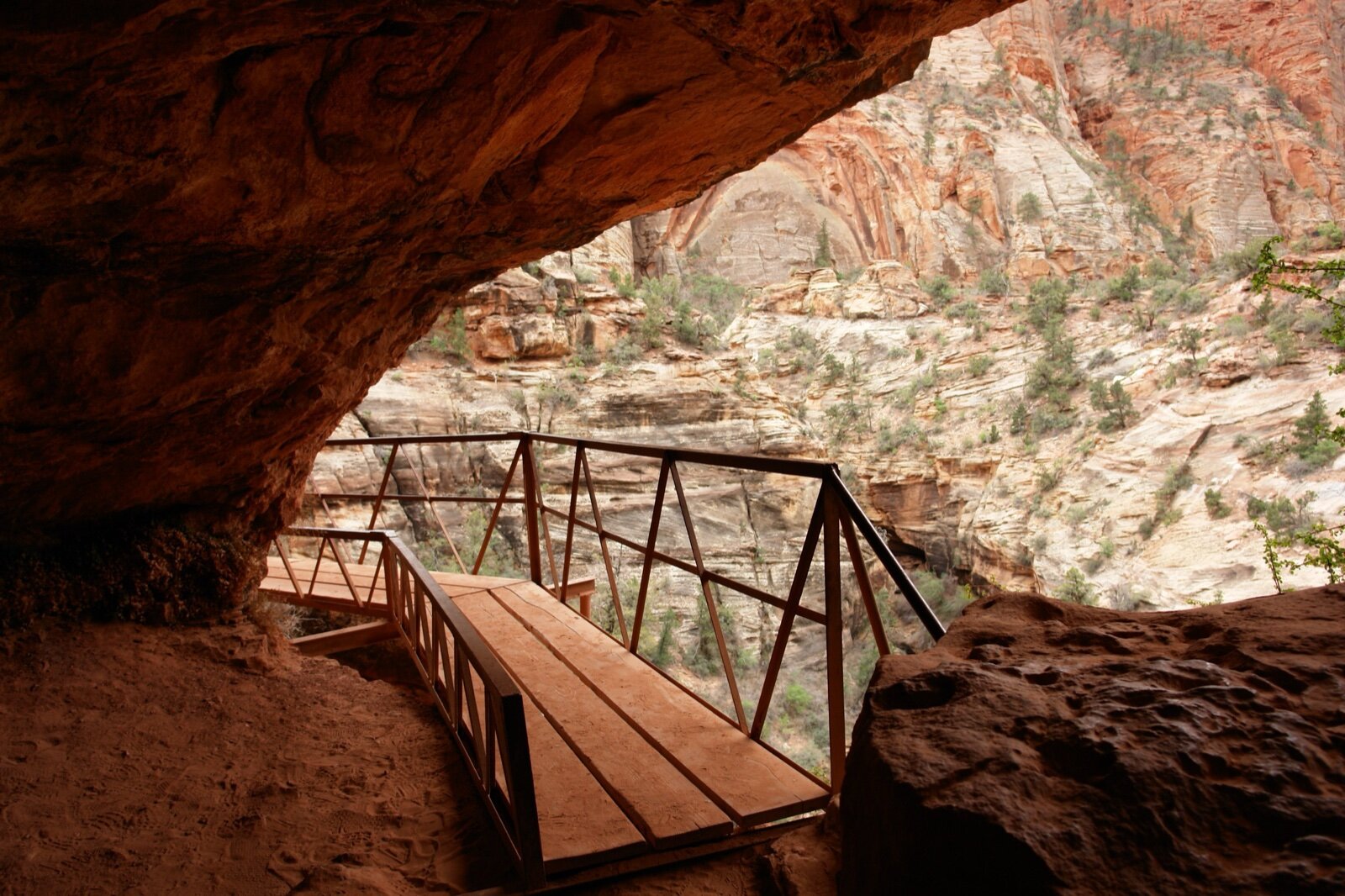
Canyon Overlook Walk; Zion National Park by Alex Proimos (CC BY 2.0), via Wikimedia Commons.
The best wellness retreats in Utah divide along a line you can see from a plane. In the south, red rock country around St George, Zion and Lake Powell produces desert properties built around hiking, heat, silence and space. In the north, the Wasatch Range above Salt Lake City and Park City produces mountain lodges and ski-season spas built around altitude, snow and water. The two halves are four hours apart and answer different questions, so pick the landscape first and the property second.
Utah is also the one western state where the wilderness is the product. Very little here is a resort with a spa attached; most of these places are organised around getting you outside for several hours a day and treating the spa as recovery. If you want to lie by a pool for a week, this is the wrong state.
Southern Utah: red rock, desert and Zion
Amangiri, Canyon Point
The property that put Utah on the international wellness map. Amangiri sits on 600 acres of desert just north of the Arizona border near Lake Powell, its concrete and glass pavilions built around a rock escarpment. The spa runs to 25,000 square feet across two levels, with a step pool, flotation therapy, water pavilions and treatments drawn from the Navajo concept of hozho, roughly translated as balance and harmony.
Adjacent, and part of the same operation, is Camp Sarika: ten tented pavilions with private plunge pools set further into the desert, for people who want the isolation dialled up.
Who it suits: someone for whom cost is genuinely not the constraint, and who wants the landscape to be the entire experience. This is one of the most expensive places to sleep in the United States, and the rate includes meals and activities rather than treatments.
Red Mountain Resort, Ivins
The other end of the southern Utah scale and, for most travellers, the more useful one. Red Mountain sits at the base of Snow Canyon State Park outside St George, and it is a fitness and adventure resort rather than a spa hotel: guided hikes most mornings, a full daily class schedule, a spa building, and an all-inclusive structure that covers meals, classes and hikes.
Who it suits: solo travellers and people who want a schedule handed to them. It has run this format for decades and the guest mix skews to repeat visitors who come for the hiking. Nightly rates land in the mid-range, which for an all-inclusive with daily guided activity is one of the better values in the western states.
Green Valley Spa, St George
Established in 1986 and one of the longest-running destination spas in the region, Green Valley sits a short drive from Red Mountain on the other side of St George. It has changed hands and format over the years and now operates with a spa and wellness clinic alongside the resort accommodation.
Who it suits: people who want the southern Utah hiking country at a lower price point than the destination-resort tier, and who will build their own days rather than follow a set programme. Check the current programme directly before booking, because what is on offer here has varied more than at the other properties on this list.
Zion Ponderosa Ranch Resort, near Zion National Park
Not a spa, and included deliberately. Zion Ponderosa sits on the east rim above Zion on a working ranch property, with cabins, glamping tents and a large activity programme. It hosts independently run yoga and wellness retreats through the year rather than operating one itself, which means the calendar is worth checking rather than assuming.
Who it suits: groups, families and anyone whose idea of a reset involves a canyon at sunrise rather than a treatment room. It is also the practical base if the point of the trip is Zion itself.
Northern Utah: the Wasatch and Park City
The Lodge at Blue Sky, Wanship
An Auberge Resorts property on a 3,500-acre ranch about 25 minutes from Park City, built around Edge Spa, an equestrian programme, a working farm and a whiskey distillery on site. The wellness offer here is unusually specific: equine-assisted sessions, altitude-aware fitness, and a spa built into the hillside with treatment rooms that open onto the landscape.
Who it suits: couples and anyone who wants luxury with a ranch character rather than a resort character. It is expensive, though meaningfully less so than Amangiri, and it works year round because the ranch has a summer identity as well as a ski-season one.
Sundance Mountain Resort, Provo Canyon
Founded by Robert Redford in 1969 and still the most distinctive property in the state. Sundance sits under Mount Timpanogos in Provo Canyon, and its wellness programme sits alongside an arts programme: pottery, printmaking, jewellery and photography studios run in parallel with yoga, guided meditation and the Spa at Sundance.
Who it suits: people who find pure wellness retreats airless and want something to make as well as something to stretch. Rates are mid-range by mountain-resort standards, and it is roughly an hour from Salt Lake City airport, closer than Park City.
The Cliff Spa at Snowbird, Little Cottonwood Canyon
A day-spa and stay option rather than a retreat, and the best altitude experience in the state. The Cliff Spa occupies the top floors of the Cliff Lodge at Snowbird, at around 8,000 feet in Little Cottonwood Canyon, with 21 treatment rooms, a yoga studio, a fitness centre, a salon and a rooftop pool and hot tub with a canyon view. Access is for adults aged 16 and over and treatments should be reserved ahead.
Who it suits: anyone building their own wellness few days out of a Salt Lake City trip. The canyon is 40 minutes from the airport, which is the shortest airport-to-mountain transfer of anywhere on this list.
The Kura Door, Salt Lake City
The city entry, and the one to know if you have a spare afternoon rather than a spare week. The Kura Door is a Japanese-style holistic day spa on 3rd Avenue in the Avenues district, offering massage, ofuro soaking tubs, body treatments and aesthetics by appointment.
Who it suits: business travellers, people breaking a long drive, and anyone stitching a wellness day into a national-parks itinerary. It costs a fraction of a night at any of the resorts above.
How to choose between them
Three questions settle it faster than any comparison table.
- Desert or mountains? Southern Utah is best from March to May and September to November; July and August regularly pass 38C in St George. Northern Utah works year round, with the mountain properties at their busiest and priciest in ski season.
- Programme or freedom? Red Mountain hands you a schedule. Amangiri, Blue Sky and Sundance let you build your own days from an activity menu. Neither is better, but arriving at the wrong one is the most common disappointment.
- How much altitude? Snowbird sits around 8,000 feet and Park City around 7,000. If you are coming from sea level, give yourself a day before any hard exertion and drink far more water than feels necessary.
If you are still deciding between formats rather than places, read types of wellness retreats and how much a wellness retreat costs. For neighbouring states, see our guides to California and Colorado, or browse everything from the Retreat Central homepage. Park and trail conditions across the state are published by Utah State Parks, and the National Park Service lists Zion's shuttle and permit rules, which change seasonally.
Frequently Asked Questions
When is the best time of year for a Utah wellness retreat?
For southern Utah, March to May and September to November. Spring and autumn give you hiking temperatures in the 20s Celsius, while July and August in St George and around Zion regularly pass 38C and push everything outdoors to dawn. For the Wasatch properties near Park City and Salt Lake City, the summer and early autumn are the value season and the winter is peak, because you are competing with ski demand.
Is Utah cheaper than California or Arizona for a retreat?
At the top end, no. Amangiri is one of the most expensive resorts in the country and The Lodge at Blue Sky prices with Napa and Aspen. In the middle it is better value, because Red Mountain's all-inclusive rate covers meals, classes and guided hikes that would be extras elsewhere, and the Salt Lake City day-spa option costs a fraction of a resort night. Utah's real saving is on flights and transfers rather than room rates.
Do I need to be fit for a Utah retreat?
More than in most states, though not at every property. Red Mountain and Zion Ponderosa build their days around hiking on uneven desert ground, and altitude at the mountain resorts makes moderate effort feel harder than it would at sea level. Every property runs graded options, and the spa-led properties assume nothing. Be honest about your walking distance when you book and you will be matched sensibly.
How does altitude affect a Utah retreat?
Snowbird sits around 8,000 feet and Park City around 7,000, high enough that most visitors notice shortness of breath, poor first-night sleep and dehydration. Arrive a day early if you can, keep the first day light, drink considerably more water than usual, and go easy on alcohol for the first 48 hours. Southern Utah is much lower, roughly 2,700 feet at St George, and rarely causes problems.
What is the difference between a destination spa and a wellness resort?
A destination spa such as Red Mountain sells you a programme: the rate includes meals, classes and guided activity, and the daily schedule is the product. A wellness resort sells you a stay and lets you buy treatments and activities on top, so the cost is open-ended and the days are yours to shape. Decide which you want before comparing nightly rates, because the two numbers are not measuring the same thing.
How long should a Utah retreat be?
Four to five nights is the sweet spot. Three is enough for a spa reset in Park City or a long weekend in St George, but southern Utah involves a real drive from any airport and a three-night trip loses two of them to travel. At five nights the hiking legs arrive, the sleep improves and the altitude stops being a factor.