Best Wellness Retreats in New York: 6 Picks by Region and Budget
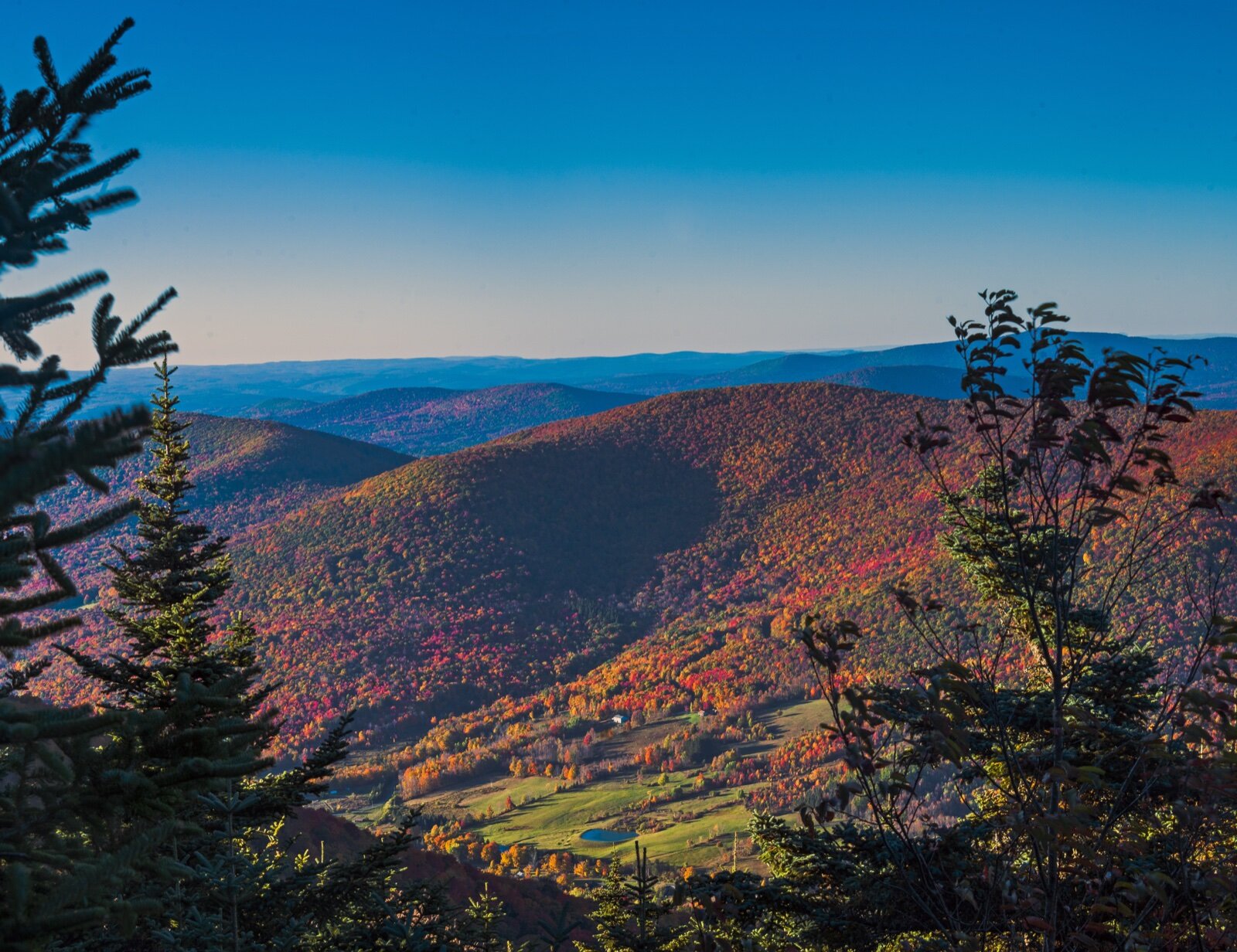
Evergreen Mountain in autumn from Buck Ridge Lookout, Catskills by Daniel Case (CC BY-SA 3.0), via Wikimedia Commons.
The best wellness retreats in New York have one advantage nowhere else on this list of states can match: eight million people can reach them in under three hours without boarding a plane. That proximity shapes everything. New York retreat centers run short formats, weekend intensives and three-night programs, because their guests are coming up on a Friday and going back on a Sunday.
They cluster in two places. The Hudson Valley, an hour and a half to two hours north of the city, is the softer landscape: river towns, old estates, gentler hills. The Catskills, further west and several hundred feet higher, are wilder, colder and quieter, and they hold most of the region's Buddhist centers. Below are six places worth the drive, spread across three very different price tiers.
1. Omega Institute for Holistic Studies, Rhinebeck
Hudson Valley. Best all-rounder. Omega is the region's default answer and has been for decades; the 2026 season is its 49th. The campus sits about 90 miles north of New York City, and the model is a workshop catalog rather than a fixed program: mind and spirit, body and health, creative expression, leadership, relationships, sustainable living, plus signature weeks for families and the arts.
The part people miss is the Rest and Rejuvenation option, which lets you book the campus, the meals, the grounds and the wellness center without enrolling in a workshop at all. That is the right choice if what you actually want is a quiet week with a lake and no decisions. Accommodation runs from tent cabins to private rooms, which is also why Omega spans a wider price range than anywhere else here.
Suits: first-timers, solo travelers, anyone who wants structure available but not compulsory.
2. Menla Retreat and Dewa Spa, Phoenicia
Catskills. Best setting. Menla sits in a valley in the Catskills about two hours from the city, and it is a project of Tibet House US, the Dalai Lama's non-profit Tibetan cultural center in America. That lineage is not decorative: the Dewa Spa is one of very few places in the West offering restorative therapies from the Tibetan tradition, and the retreat calendar runs from Buddhist teaching to yoga, holistic health and shamanic work, in formats from a two-day weekend to a full week.
You can also book a personal getaway with no program attached and simply use the valley, the streams and the spa. If the point of the trip is that you stop looking at buildings, this is the one.
Suits: couples, meditators, anyone who wants a spa without a resort attached.
3. YO1 Longevity and Health Resorts, Monticello
Catskills. Most resort-like. YO1 occupies over 1,300 acres in Sullivan County with 131 guest rooms, and it is the most clinical offering in the state: Ayurveda, naturopathy, yoga and acupuncture, delivered as structured programs after a personalized consultation. There are named tracks for insomnia, anxiety, weight management, detox and diabetes management, alongside general restorative packages.
Programs start at three nights, and there is a day pass running 8am to 8pm if you want to test it before committing. Rates include organic meals and access to the pools, saunas, steam rooms, gym and daily yoga and meditation.
Suits: people who want a diagnosis and a plan rather than a vibe, and anyone travelling with a non-meditating partner.
4. Zen Mountain Monastery, Mount Tremper
Catskills. Best introduction to Zen. A working monastery in the Catskill foothills, home of the Mountains and Rivers Order, a Western Zen Buddhist lineage. The entry point for most visitors is the Introduction to Zen Training Weekend, which runs regularly through the year and teaches sitting, walking meditation, liturgy, work practice and formal meals from scratch. There is a public Sunday program if you want to look before you leap, and residential training for people who want to go much further.
Suits: anyone curious about Zen who has never sat a retreat. Not a spa, and not pretending to be.
5. Blue Cliff Monastery, Pine Bush
Hudson Valley. Best value. Blue Cliff practices in the Plum Village tradition founded by Thich Nhat Hanh, and it is the most accessible serious retreat in the state on price. Overnight seasonal retreats run from April to November, lasting anywhere from two to fourteen nights, alongside five-day themed retreats and weekly Days of Mindfulness. Everything runs on donation, and weekend work-exchange places carry a discounted contribution rate of $30 to $80 depending on what you can give.
Check the calendar carefully before travelling: the monastery pauses Days of Mindfulness for its own retreat periods, including a break in August 2026.
Suits: tight budgets, first retreats, anyone who responds better to gentleness than to discipline.
6. Ananda Ashram, Monroe
Hudson Valley foothills. Best for an unstructured personal retreat. Run by the Yoga Society of New York and open year-round, Ananda Ashram is the quietest option on this list. There is no program to enroll in: you take a simple room, eat vegetarian meals from the garden, and drop into whatever the ashram is already doing. That means morning and evening meditation, hatha yoga, an open Sanskrit class, devotional chanting and a sacred fire ceremony.
Suits: repeat retreatants, people who want days with no agenda, anyone put off by the word "wellness".
How to choose between them
- Decide format before price. A monastery sells you a practice and a schedule. A resort sells you a stay and a treatment menu. The nightly rates are not comparable, and the disappointment when people mix them up is the single most common complaint in retreat reviews.
- Check what is included. At YO1 the treatments are in the rate. At Omega the workshop is a separate line from the room. At Blue Cliff there is no rate at all, only a contribution.
- Match the season to the goal. October for scenery, February for silence, high summer for family programs and the highest prices.
- Book the shortest version first. Almost every center here has a weekend or a day pass. Use it before committing a week.
If you are still deciding what kind of trip you want, start with types of wellness retreats and how to choose one. For the wider region, see our guide to the best wellness retreats on the East Coast.
Frequently Asked Questions
What is the best wellness retreat in New York State?
It depends what you want the week to do. Omega Institute in Rhinebeck is the best all-rounder, with a large workshop catalog and a Rest and Rejuvenation option if you would rather not sign up for anything. YO1 in Monticello is the most resort-like and the most medically framed. Menla in Phoenicia is the most beautiful setting and the only place in the region offering Tibetan therapies.
How much does a wellness retreat in New York cost?
There are three price tiers. Monastic and ashram programs run on donation or a modest suggested contribution; Blue Cliff Monastery's work-exchange weekends start at a contribution of $30. Ashram and retreat-center stays at Ananda Ashram or Omega sit in the middle, with the room type driving most of the difference. Destination wellness resorts such as YO1 sit at the top, because the program, meals and consultations are bundled into the nightly rate. Always check what is included before comparing two numbers.
Where are most New York retreats located?
Two clusters. The Hudson Valley, roughly 90 minutes to two hours north of New York City, holds Omega in Rhinebeck and Blue Cliff Monastery in Pine Bush. The Catskills, a little further west and higher, hold Menla in Phoenicia, Zen Mountain Monastery in Mount Tremper and YO1 in Monticello. Both are reachable without flying, which is the main practical advantage of retreating in New York.
Can you do a wellness retreat in New York without a car?
It is possible but it takes planning. Metro-North and Amtrak reach the Hudson Valley, and several centers arrange pickups from the nearest station or bus stop if you ask when booking. The Catskills are harder; Trailways buses serve Phoenicia and Monticello, but you will be dependent on the center for everything after arrival. Ask before you book rather than after.
When is the best time of year to go?
Late September and October, if you can get a room. The foliage in the Catskills and the Hudson Valley is the reason people drive up from three states away, and the weather is still good for hiking. Summer is busiest and most expensive. Winter is quiet, cheap and genuinely restorative if you are going for silence rather than scenery, though several seasonal programs pause between November and April.
What is the difference between a monastery retreat and a wellness resort?
A monastery or ashram sells you a practice: you join an existing daily schedule, you help with chores, the food is vegetarian, and the cost is low or donation-based. A wellness resort sells you a stay: treatments, consultations and a room, with the schedule shaped around you. Neither is better, but people who book the wrong one are reliably unhappy about it.
Sources
- Omega Institute for Holistic Studies, Rhinebeck NY: eomega.org
- Menla Retreat and Dewa Spa, Phoenicia NY: menla.org
- YO1 Longevity and Health Resorts, Monticello NY: yo1.com
- Zen Mountain Monastery, Mount Tremper NY: zmm.org
- Blue Cliff Monastery, Pine Bush NY: bluecliffmonastery.org
- Ananda Ashram, Monroe NY: anandaashram.org
Every center on this page was checked against its own website on August 18, 2026. Programs, seasons and rates change, so confirm directly before booking.